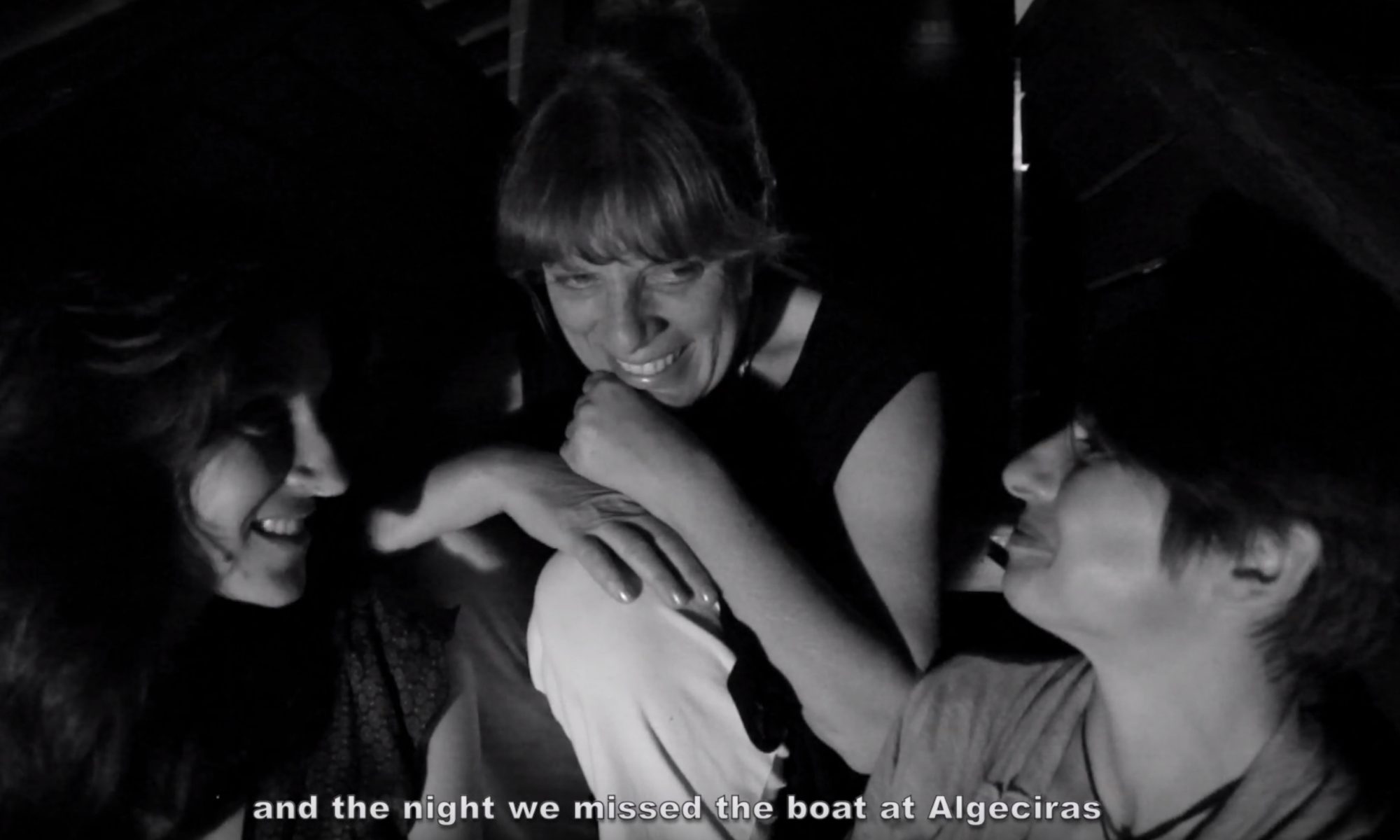
the whole project starts from the following sentence
Ξένος: …ἐφάνη διάνοια μὲν αὐτῆς πρὸς ἑαυτὴν ψυχῆς διάλογος
The Stranger: “…it appears that thinking is a dialogue of the soul with itself”.
Plato. Sophist, 264.
________________________
a bit of philology
ἐφάνη (e-phàn-eh)
φάν – The root of the ancient Greek word for ‘light’ (phos) and then for phenomenon; the prefix (ἐ – vtr the Latin ‘ex’) of spring, breaking, explosion – the Joycean ‘epiphany’.
δια- (di.a); διάνοια (di.à.noi̯.a). διάλογος (di.à.logos)
The prefix harmonises ‘logos’ and ‘nous’ in the same key (dialogue – dianoia).
πρὸς
πρὸς – (pros) this preposition, with the accusative, indicates destination, agreement, union. As in modern languages (“I speak with you” means “I speak to you”).
But ‘pros‘, originally, and quite literally, is nothing but our ‘before’ (the germanic ‘vor’ – pr > fr). Standing before. Theatre.
ψῡχή (psūkhḗ)
Soul.The mechanical activity of ‘living’; like all the roots based on the initial explosive labial (pneuma, vlna – and variations: wave in slavic languages; flux, flow; flower: Bloom), tells of a swelling, an inflammation; or, as in this case, thanks to the sibilant, a laceration (thus, at least, in Homer: the animula, the ‘little soul’ fleeing through the wound). In any case, a dynamic.
Ξένος (xènos): The Stranger.
As Italians, we have in some way identified ourselves with this Stranger. The question in object could sound like this: aren’t two ‘soul-mates’ coming from different countries – let’s say two philosophers or two murderers – more similar to each other than two random Irish gentlemen? Could two women separated by an ocean not have more affinities than a man and a woman from Dublin, even when sharing the same bed? Won’t two children speaking different idioms be more mutually intelligible than two Irish ladies from different eras, even if speaking the same dialect? And will Mr. Nabokov be enlisted in some ‘Homeland Literature History’ as legitimately as Dr. Beckett? Józef Conrad more than John Scotus Eriugena? Ó Conaire less than Gibran?”
Exile has often been described as our common modern homeland, and here lies perhaps our legitimacy to treat Joyce “while not Irish enough”; or Irish non-Catholics, or from different eras, etc. Like that Stranger, who was speaking with Socrates in Plato’s dialogue; he came, geographically speaking, from Italy (Elea): was he in some way Italian? Was Trieste ‘Italy’ in 1905? Was the Hapsburg Empire unionist? Isn’t any Empire?
It is the fecund category of ‘belonging’ which we would like to keep open, as the environmental acceptance of the word ‘identity’. Maybe it could be, in this case too, speaking of the soul, mainly a matter of dynamics.
Polyphony
As for the breakdown of Molly’s character into several voices: two precedents in Joyce (to begin with – this site is still under construction):
“Having first felt that it is one thing you feel now that it is a thing. You apprehend it as complex, multiple, divisible, separable, made up of its parts, the result of its parts and their sum, harmonious. That is consonantia.”
J. Joyce: A Portrait of the Artist as a Young Man.
In our cubist film, we took the opposite direction ̶ yet remained on the same axis ̶ going from unity to multiplicity, from synaeresis to διαίρεσις (diaeresis: the Sophist gives a pattern of it).
“This progress you will see easily in that old English ballad Turpin Hero, which begins in the first person and ends in the third person. The dramatic form is reached when the vitality which has flowed and eddied round each person fills every person with such vital force that he or she assumes a proper and intangible esthetic life.” (ibid.)
Joyce observes here the ideal continuity between first and third person. Up to a certain point ‘Continuity’ also means ‘Identity’, with all the drama (the action, the theatre) in it. Compare, for example, the relationship, in the same years, between the third and the first person in Marcel Proust (Jean Santeuil; Swann in love). The emphasis is on the dialectic of the elements, more than on their difference.
And talking about theatre: in the footsteps of the Roman process, the scholastic quaestio splits the juridical matter in antagonism – in binary opposition, M. de Saussure would have said. The quaestio will become the ‘question’ of Hamlet, the student from Wittenberg, who in the soliloquy gives us an example of this process. Scholasticism and Shakespeare were Joyce’s tutelary gods, at the time. In Joyce, the first person of ‘Penelope’ will blow up into multiplicity: then Here Comes Everybody.
Thinking as inner Theatre.
W. Shakespeare, Richard II; V, 4:
“My brain I’ll prove the female to my soul / My soul the father, and these two beget /A generation of still-breeding thoughts /And these same thoughts people this little world […]Thus play I in one person many people […] And straight, am nothing”
And straight…
The quote also applies to the “gender” problem. About the fact that some of Molly’s lines in Mollysday are spoken by a man (actually, more precisely, by an actor, not the same thing: the actor, in that ancient roman courtroom, is the plaintiff). The male voices and performances are not a sexual argument – on the contrary. It all pertains to the neutrality of the language. Language as an attribute of the human being, in his neutrality.
In James Joyce, this neutrality has the mark of the exiled, the mark of the three main roles of his masterwork: the Foreigner (‘Poldy not Irish enough‘), the Prisoner (‘locked up like in a prison‘), the Stranger (“union with a young stranger“)*.
*And, quite expectedly, on the other pole: in Cyclops – “I was born here. Ireland” . In Penelope – “theyre not going to be chaining me up”; and “but hes no chicken nor a stranger either “.
“And therefore as a stranger give it welcome” – Hamlet I, 5.
Homer, Odyssey. VI, 187…
If you want to play the Language, you must move it away from the Character. Without falling into Formalism, into Nihilism (HCE, Dodecaphony…). Modernism is tension, not rupture. The modernist house (of Language, of Rights, even of Le Corbusier) must be habitable. Hence, a film: Mollysday.
 mollysday